UV Lamp Replacement Considerations for IST UV Systems
Learn key considerations when evaluating UV lamp replacement requirements for IST UV systems, including arc length, electrical parameters, compatibility review, and OEM-compatible evaluation.
UV Lamp Replacement Considerations for IST UV Systems
Understanding Replacement Requirements in Industrial UV Systems
Industrial UV systems are often expected to operate reliably for many years. As equipment ages, maintenance teams may eventually need to evaluate replacement lamp options to support production continuity and long-term operational requirements.
When reviewing replacement requirements for UV systems associated with IST installations, dimensional matching is only one part of the evaluation process.
A successful replacement project typically involves reviewing operating conditions, electrical characteristics, and application requirements before manufacturing decisions are made.
Why Replacement Evaluation Matters
UV systems play a critical role in production environments where curing consistency, process stability, and equipment reliability directly affect manufacturing performance.
Over time, organizations may evaluate replacement options due to:
Lamp aging
Reduced UV output
Maintenance planning
Equipment refurbishment
Sourcing flexibility
Long-term operational support
Before selecting a replacement lamp, understanding the existing system configuration can help reduce uncertainty during implementation.
Lamp Dimensions Are Only the Starting Point
One of the most common assumptions in UV lamp replacement projects is that matching the overall lamp dimensions will automatically result in equivalent performance.
In practice, replacement evaluation often extends beyond physical size.
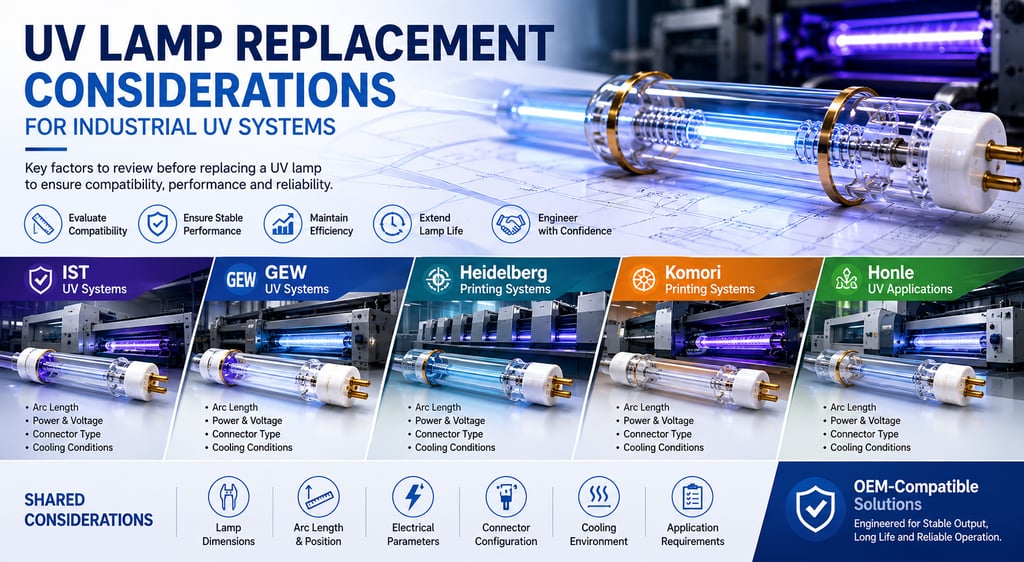
Additional considerations may include:
Arc length
Electrical operating parameters
Connector configuration
Cooling conditions
Reflector design
Application requirements
These factors may influence overall system performance and should be reviewed as part of the evaluation process.
For a broader overview, see our UV Lamp Replacement Guide.
Reviewing Arc Length Requirements
Arc length can influence how UV energy is distributed within a curing or exposure system.
Even when two lamps share similar external dimensions, differences in arc length may affect operating characteristics and production performance.
For this reason, arc length information is often included as part of compatibility evaluation and manufacturing review.
Electrical Parameters Should Be Verified
Industrial UV systems are designed around specific operating conditions.
Before evaluating replacement options, it is often useful to review:
Operating power
Voltage characteristics
Electrical connections
System requirements
Confirming these parameters helps support a more complete understanding of replacement requirements.
Connector and Installation Considerations
Connector configurations may vary between installations and equipment generations.
During replacement planning, maintenance teams often review:
Connector style
Cable configuration
Installation space
Mechanical fitment requirements
Collecting photographs and installation information can simplify technical review and project evaluation.
Application Requirements Remain Important
Replacement requirements may vary depending on how the UV system is being used.
Application considerations can include:
Printing environments
Packaging production
Industrial UV processes
Exposure-related applications
Understanding operating conditions helps ensure that replacement planning aligns with production objectives.
Explore additional Industrial UV Applications supported by XLEADTECH.
Engineering Review Before Manufacturing
Industrial UV replacement projects often involve multiple technical considerations beyond simple dimensional matching.
An engineering review may help evaluate:
Physical dimensions
Arc length requirements
Electrical parameters
Connector configurations
Application conditions
Reviewing these factors before manufacturing begins can help support more effective project planning.
Learn more about our Engineering Support for UV Systems.
OEM-Compatible Evaluation Approach
Many industrial organizations seek flexibility when planning maintenance and replacement projects.
When evaluating OEM-compatible alternatives, it can be useful to review:
Existing system requirements
Installation conditions
Operating characteristics
Production objectives
A structured evaluation process helps identify important technical considerations before implementation.
Additional information is available in our OEM Compatible UV Lamp Solutions resource.
Information to Prepare Before Requesting a Review
Before beginning a compatibility evaluation, consider gathering:
✓ Existing lamp photographs
✓ Lamp dimensions
✓ Arc length information
✓ Electrical specifications
✓ Connector details
✓ Equipment information
✓ Application details
Providing complete information can help support a more efficient technical review process.
Need Help Evaluating an IST UV System Replacement Project?
Every industrial UV installation has unique operating conditions and technical requirements.
Whether you are reviewing maintenance options, planning a replacement project, or evaluating OEM-compatible alternatives, a structured compatibility review can help identify important considerations before implementation.
Start with a Compatibility Review to discuss your project requirements.